The threat that is Musk. Shouldn’t there be real consequences?
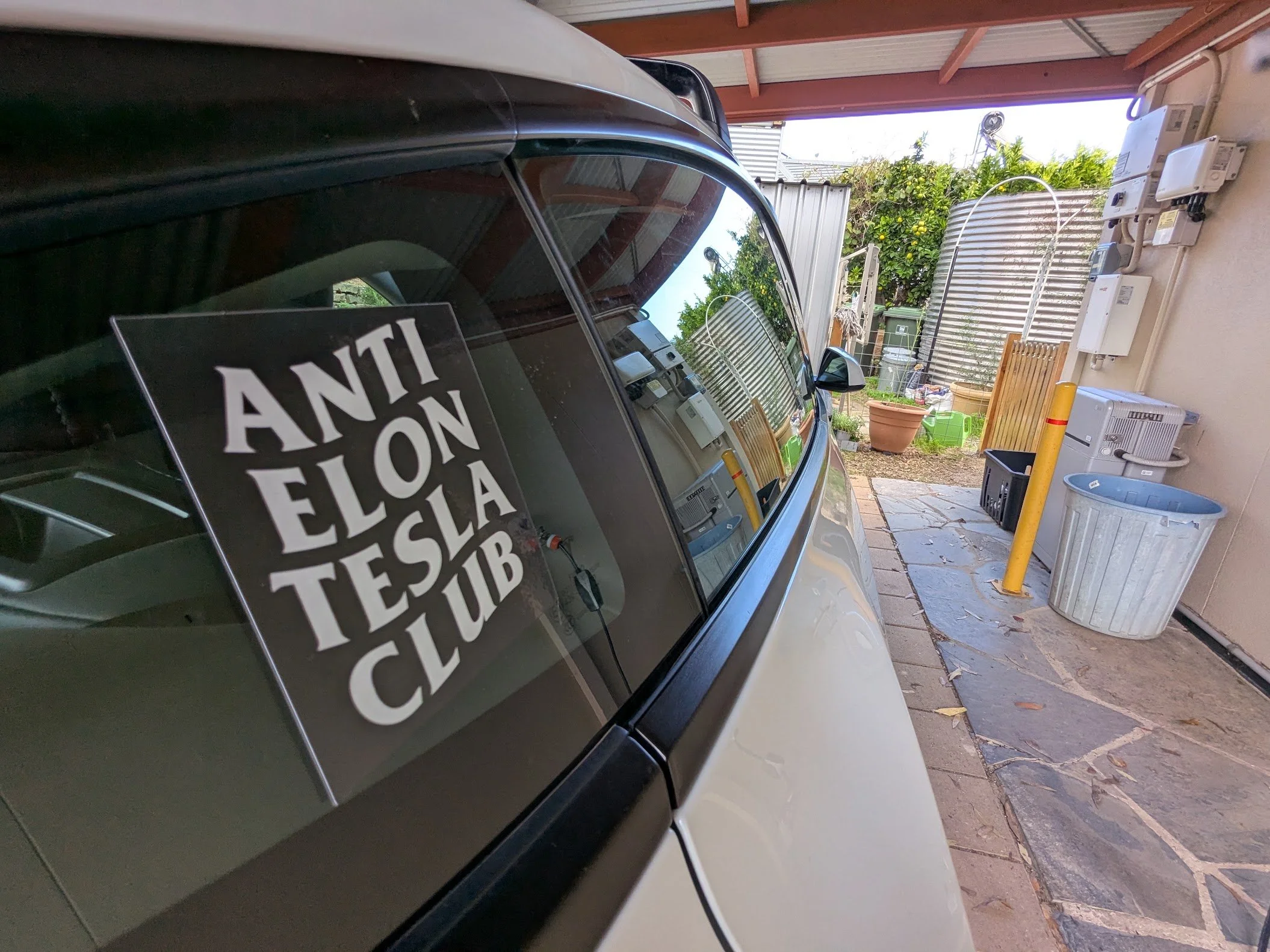
When the politics of apartheid South Africa was recognised for what it was – violent, toxic, anti-human rights – the world mobilised to ban South Africa’s exports, and its sports teams.
Shouldn’t the world also mobilise to boycott consumer products that are now recognised to be fuelling violence, toxic politics and the erosion of human rights? Among the first on my list would be the products proffered by Elon Musk, among them his social media platform X, formerly Twitter, his AI assistant Grok, his space exploration company SpaceX and satellite service Starlink, which are colonising space as if he owns it.
The world’s richest person is using his wealth to shape the world and its surrounds as if they are his own laboratory. He lacks empathy and has publicly said he sees empathy as a malfunction. His views on race celebrate racial purity and justify violence, making him a threat to global security.
Musk’s role in stoking violence in Northern Ireland is clear. In the wake of the 8 June murder of Henry Nowak, allegedly committed by a Sudanese man, rioters used one crime to justify targeting the entire Sudanese community. Musk posted content that whipped up fear and anger, inviting his 240 million followers to blame migrants and people of colour for their problems. He has invited back onto X activists such as Tommy Robinson who was previously banned for inciting civil unrest. Musk’s own posts and reposts are like those of self-identified white supremacists.
In my view, he has lost his social licence to operate. Others think so. The barrister leading the Bondi terror attack royal commission condemned X and its owner for failing to limit the spread of online hate. Richard Lancaster said their refusal to engage with the commission after repeated attempts to reach out, showed “a shocking disregard for the Australian community”. He asked whether X Corp had a licence to operate.
There are things the Australian government could do.
It could direct internet service providers to block access to certain sites. It already does this for sites depicting sexual abuse and offering internet file sharing.
The federal government could also direct the national broadband network (which it owns) not to use Starlink. The ABC reported recently that Australian government officials have privately flagged the risks of the country’s growing reliance on Starlink. Musk has reportedly cut Ukraine and then Russia’s access to Starlink at various stages during their war, apparently on whims. The Australian Electoral Commission uses Starlink to connect polling places. It’s a contract it might be wise to review.
Traditionally, corporate leaders act as if they need to take account of the expectations of the societies in which they operate. Musk has been allowed to operate differently, in part because of his (initial) closeness to the second Trump administration.
After using his platform X to promote Trump’s election, he has switched to campaigning against people of colour. He was present in the Oval Office when Trump berated South Africa’s President Cyril Ramaphosa over his alleged treatment of white farmers. Musk is said to have lobbied the president to offer a “rapid pathway to citizenship” for white South African farmers fearing persecution. Born in South Africa himself, Musk is also reported to have influenced the executive order that stopped about US$450 million in annual aid payments to South Africa, much of it for HIV/AIDS prevention programs.
Australia has an unusually good record in pushing back against X (and also TikTok and Facebook). After a stabbing attack on an Assyrian church bishop in Sydney in 2024, Australia’s eSafety Commissioner Julie Inman Grant ordered X and other platforms to remove inflammatory posts and a video of the attack. The others complied. X refused and took the eSafety Commissioner to court.
“I find it extraordinary that X chose not to comply and are trying to argue their case,” the prime minister said at the time. “This isn’t about freedom of expression, this is about the dangerous implications that can occur when things that are simply not true, that everyone knows are not true, are replicated and weaponised in order to cause division and, in this case, to promote negative statements and potentially to just inflame what was a very difficult situation. Social media has a social responsibility.”
Inman Grant told the BBC she had received death threats and her children had been doxxed after Musk called her the “censorship commissar” in a post to his millions of followers. (Doxxing refers to the release of private information online.)
A Columbia University study found Inman Grant had been mentioned in almost 74,000 posts on X ahead of the court proceedings, despite being relatively unknown online beforehand. The same year, she took X to court for failing to comply with child safety laws. In May this year, Federal Court Justice
Michael Wheelahan ordered X to pay A$650,000 plus A$100,000 towards the Commission’s costs.
Fines aren’t enough, and doubling fines (as the government has just done with age verification laws) isn’t enough. Australian government agencies should not be dealing with Musk. And we all have the choice to boycott his products.
